
by Bill Watson
A little over five years ago, our Southern Baptist church transitioned from practicing Communion on a quarterly basis to practicing it every week. We knew this change would be challenging for a lot of our members. Many of them had taken Communion four times a year their entire lives. We heard many of the usual concerns. Some said the increased frequency would make the practice far less special. Others were concerned about extra cost and attention required to celebrate every Sunday. For a small number of members, the great fear was that we were becoming Roman Catholic.
The fear of doing things that might make us Roman Catholic tends to be problematic at a fundamental level. One reason is that the Roman Catholic church simply cannot be wrong about everything. More significant is the fact that much of what Baptists think is distinctively Roman Catholic is really nothing of the sort.
Weekly Communion is not a distinctively Catholic practice. Many evangelical and protestant traditions have been practicing weekly Communion for centuries. In fact, the provision of both elements of Communion to the entire congregation on a weekly basis was one of the major contributions of early reformers in Europe. By the sixteenth century, many Catholic churches restricted weekly Eucharist to the clergy, offering one or both of the elements to lay people rarely or never. Historically, full weekly Communion was decidedly un-Roman Catholic.
This fear of becoming Roman Catholic, however historically or practically ungrounded it might be, makes Baptists notoriously wary of any language surrounding Communion that goes beyond memorialism. I’m sympathetic to this wariness. I don’t hold to the Roman Catholic doctrine of transubstantiation.
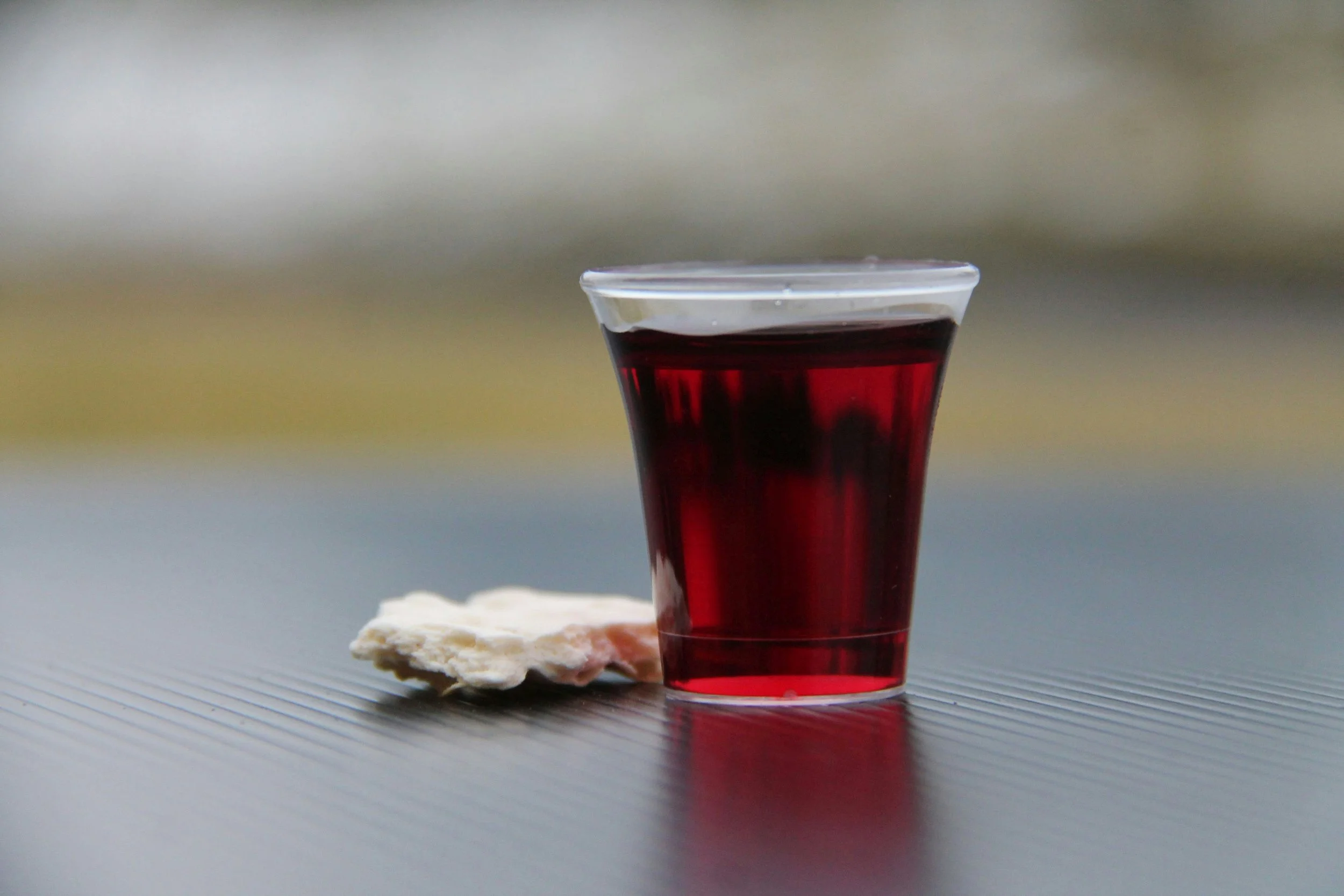
However, this fear has created an interesting problem in our church. The most controversial thing I and the other pastors have done when leading Communion over the last five years is using the unqualified words of Jesus to explain what is going on. One way to make a dyed-in-the-wool Southern Baptist nervous is to hold up the gluten free cracker and say the words of Jesus on that fateful night, “This is my body, which has been broken for you.”
To be fair, quoting Jesus here is not a big problem. It’s the following absence of any qualification that makes for some quizzical looks. The temptation for many Baptist pastors is to make sure we clarify that Jesus doesn’t mean “is” in any real sense. When we started quoting the words of Christ over the elements, without any immediate qualifying statements about memorialism, we began to get questions.
I am grateful for these questions. They have provided many opportunities for discipling our people into a deeper understanding of communion with Christ. I won’t pretend that I am a memorialist. I am not. I do believe in the real presence of Christ during Communion. That doesn’t mean I hold to the Roman Catholic doctrine of transubstantiation. I do not. I do hope that Baptists will experience a renewed interest in the possibilities of what our King mean when he said “this is my body.” I hope that Baptist pastors particularly will take a good, hard look at their own presuppositions, at the text of Scripture, at the history of the church, and consider from among the variety of explanations for this passage other ways of understanding besides mere memorialism (“mere” is not used here negatively, it just distinguishes between memorialist only and more than merely memorialist views).
But whether or not Baptists agree with my view of Communion, we ought to be happy to use the words of Jesus unadorned by our own when administering the elements. Obviously, part of our calling is the regular and diligent explanation of the Scriptures. I acknowledge that even I have in this article used more than the words of Jesus to talk about Communion. I am suggesting only that our discomfort with the raw words of Jesus at that Last Supper invites us to consider whether we have fully appreciated what is really going on when we hand out the bread and wine.
I encourage all Baptist pastors to lead Communion periodically in the manner I have described, using the unadorned words of Christ. Resist the urge to explain, to qualify. Let the words sink in. Let them reorient the people’s hearts and minds. We don’t have to do this every time. Even at our church, we often offer a more or less robust explanation of Communion during its weekly celebration. But we often do exactly what I am suggesting, we tell the people that this “is the body of Jesus.” We simply use Jesus’s words and eagerly wait to see what they will do in us.
Bill Watson is Senior Pastor of Lake Highlands Baptist Church in Dallas, TX.
