
by WINSTON HOTTMAN
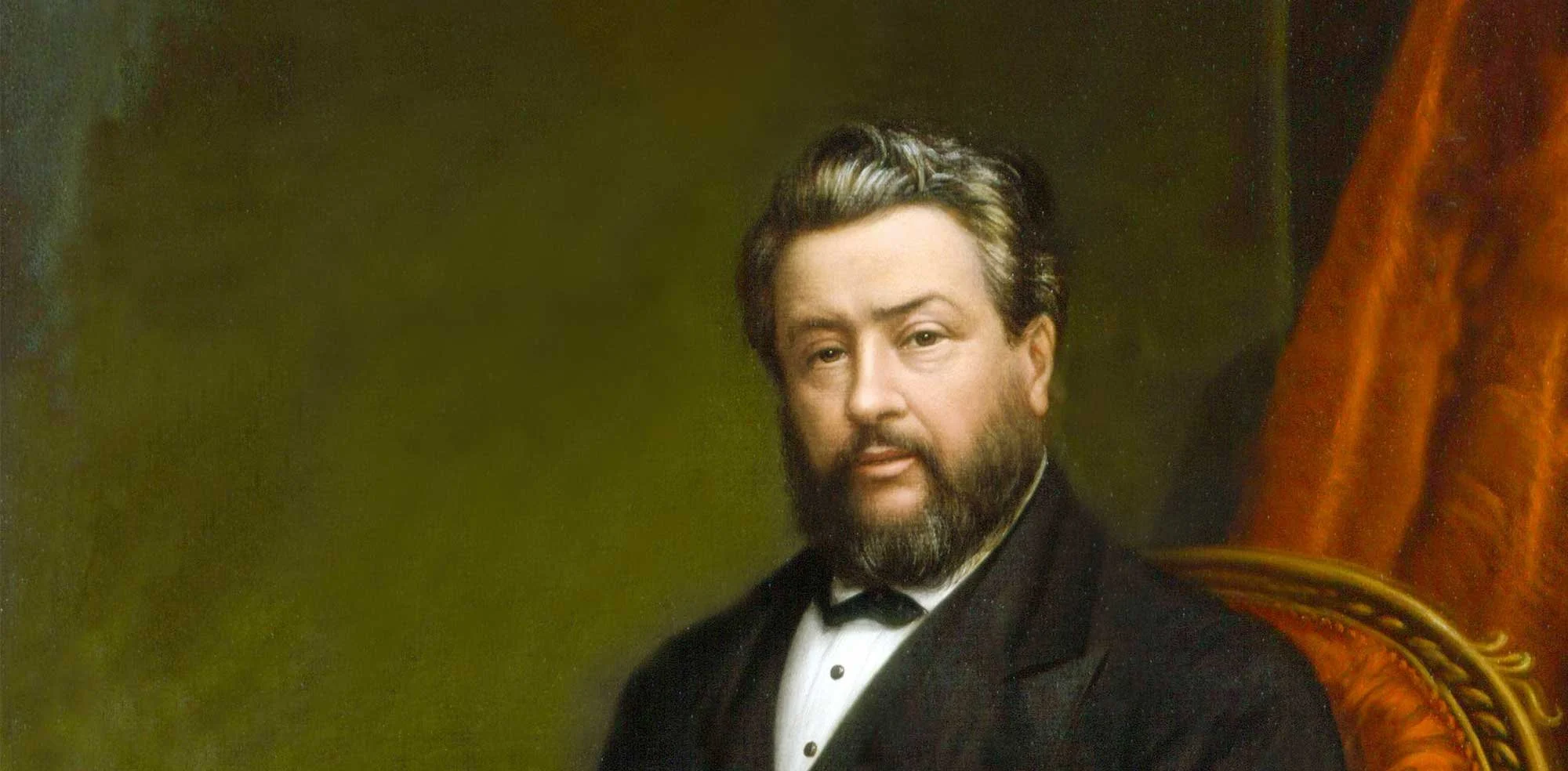
Did Spurgeon really write that?
This was my first thought as I began Michael Haykin’s book on early Baptist sacramentalism, which opens with a hymn by the famed nineteenth-century pastor.
In contrast to the way the Lord’s Supper is often discussed in contemporary Baptist churches, Spurgeon’s hymn is striking in how comfortably it celebrates Christ’s presence at the table. Opening with the beautiful line from which Haykin draws the book’s title, “Amidst us our Belovèd stands,” the hymn presents the meal as a meeting place for Jesus and his Bride, as Christ Himself invites us to gaze upon his crucified and risen body.
The first and second stanzas elegantly reflect the interplay between the signs of bread and wine and the realities of body and blood:
Amidst us our Belovèd stands,
And bids us view His piercèd hands;
Points to His wounded feet and side,
Blest emblems of the Crucified.What food luxurious loads the board,
When at His table sits the Lord!
The wine how rich, the bread how sweet,
When Jesus deigns the guests to meet!
With the third stanza, the hymn takes on the explicit form of a prayer, as we ask for grace not merely to see the signs of bread and wine, but to behold the One to whom they point:
If now with eyes defiled and dim,
We see the signs, but see not Him,
O may His love the scales displace,
And bid us see Him face to face!
The fourth stanza then recalls prior encounters with Christ at the Table that inspire a thirst for an ever-clearer vision of Him:
Our former transports we recount,
When with Him in the holy mount,
These cause our souls to thirst anew,
His marr’d but lovely face to view.
Finally, the hymn ends with a prayer that all God’s saints might be drawn into this vision of Christ made possible by His presence with us in the meal:
Thou glorious Bridegroom of our hearts,
Thy present smile a heaven imparts:
Oh lift the veil, if veil there be,
Let every saint Thy beauties see.[1]
Needless to say, a hymn like this wouldn’t fly in most Baptist churches today. Yet Haykin notes that these lyrics would have been remarkable even in Spurgeon’s own time. By the late nineteenth-century, a “mere memorialist” view of the Lord’s Supper had become the predominant view among Baptists, as it remains today.
Spurgeon’s theology of the supper, however, had deep roots. As Haykin explains, “Spurgeon had long nourished his heart and mind on seventeenth-century Puritan and eighteenth-century Baptist authors, for whom the Lord’s Table was above all a place where God’s people had sweet fellowship with their Savior who was spiritually present with them.”[2]
If you’re like most contemporary Baptists, this probably comes as a surprise. Memorialism is often assumed to be not merely a Baptist view but the Baptist view. Tracing the history of Baptist theologies of the Lord’s Supper, however, reveals far more diversity than is commonly assumed. It also highlights the significant, if not predominant, place that a Reformed view of Christ’s presence at the Table occupied in the earliest days of the Baptist movement.
Dr. Haykin’s work on early Baptist sacramentalism is a wonderful entry point into this kind of study, expanding our understanding not only of early Baptist views on the Lord’s Supper but on baptism as well. I encourage you to pick up a copy, join this year’s reading challenge, and keep an eye out for an upcoming podcast episode, where we will discuss this important historical survey.
[1] C. H. Spurgeon, Our Own Humn-book: A Collection of Psalms and Hymns for Public, Social, and Private Worship (London: Passmore & Alabaster, 1866), hymn 939. As cited in Michael A. G. Haykin, Amidst Us Our Belovèd Stands: Recovering Sacrament in the Baptist Tradition (Bellingham, WA: Lexham Press, 2022), xiii–xiv.
[2] Haykin, Amidist Us Our Belovèd Stands, xv.
