
by Michael Cooper
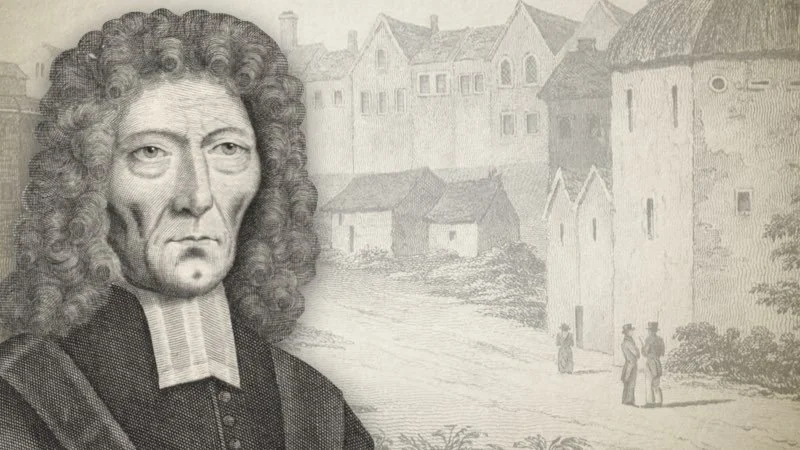
Benjamin Keach, the seventeenth-century Baptist pastor and theologian, has much to teach us about the task of preaching.
As I have explored elsewhere, by examining Keach’s sermons and writings through the lens of specific theo-homiletical questions, a systematic homiletical theology emerges. The result is a theology that is 1) epiphanical, 2) expositional, 3) experiential, 4) effectual, 5) ecclesial, and 6) evangelical.
In this brief essay, I want to consider each of these facets of Keach’s homiletical theology and how they provide a helpful framework for contemporary Baptist preaching.
1. Epiphanical (the basis)
Keach’s theology of preaching is rooted in the authority, efficacy, sufficiency, and necessity of the Bible. As Keach argues, God reveals Himself supremely in His written Word, which surpasses natural revelation. In his work, Tropologia, he describes Scripture as divinely inspired, plain yet majestic, and powerfully transformative. Scripture is “the immortal seed” that begets faith and makes sinners “wise unto salvation.”[1] According to Keach, without the Bible, humanity has only a faint knowledge of God from creation and conscience. Thus, preaching extends God’s special revelation, making Christ known directly to sinners.
Keach urges hearers to prize, believe, read, pray over, and mix faith with the Word. He warns against despising or altering Scripture, insisting it is the sole rule of faith and practice. Because the Bible carries divine authority and proven power to change hearts, preaching is fundamentally epiphanical: through preaching, God unveils Himself through faithful exposition of His inspired Word.
2. Expositional (the object)
Keach sees no distinction between preaching the Bible and preaching Christ. The Biblical message culminates in the gospel, so true exposition proclaims Jesus crucified. Ministers must feed the flock with the “bread of life,” exalting Christ’s person, His offices, and redemptive work.
Central to his message is the covenant of grace, or, as he calls it, the “covenant of peace.”[2] The covenant organizes his theology, uniting God’s eternal plan with its fulfillment in time. The covenant allows Keach to touch on important aspects of the gospel including election, divine love, justification, union with Christ, and glorification. Yet, at the heart of Keach’s preaching is a desire to be expositional and rigorously Christocentric.
3. Experiential (the subject)
Preaching involves the divine Preacher and his human ambassadors, which is something that Keach notes often when he discusses the proclamation of God’s Word. The chief duty of a pastor is faithful proclamation of the whole counsel of God, feeding souls, and overseeing the flock with humility. Yet Keach is quick to point out that by the Spirit, Jesus is the true Preacher.
The risen Christ appoints ministers, equips them, opens their mouths and hearts, and speaks through them. As those who know Christ personally and who allow truth to flow through character and conviction, ministers are Christ’s ambassadors, bearing His authority. As the pastor stands in the stead of Christ, he becomes the mouth of Christ to the people. Therefore, to reject the ambassador’s faithful word is to reject Christ’s word.[3] For Keach, this highlights an important experiential dimension of preaching: it is a living encounter with Christ.
4. Effectual (the means)
Keach emphasizes dependence on the Holy Spirit over human eloquence. Preachers must proclaim the Word in the Spirit’s power, avoiding rhetorical manipulation that overshadows the work of the Spirit. Like William Perkins, Keach is suspicious of the overuse of human rhetorical invention. While he uses metaphors skillfully (and sometimes not so skillfully), he always attempts to subordinate them to the Spirit.
This is because Keach understands that the Spirit empowers the outward message as He works inwardly, regenerating sinners and sanctifying believers. In other words, preaching is effectual by means of the Spirit. It is because of the Spirit that proclamation can serve as God’s ordained means to accomplish salvation and spiritual growth. The gospel call, paired with the Spirit’s inward work, brings life to the dead and strengthens faith for the weak. To overuse human rhetoric is simply “preaching to the ear” and not “to the heart.”[4]
5. Ecclesial (the context)
Keach locates preaching, which he calls the “great ordinance,” at the very center of the church’s worship. But he also appreciates the relationship between proclamation, baptism, and the Lord’s Supper as means of grace. As with baptism and the Supper, preaching bears the real, spiritual presence of the risen Christ. In the Word and the other ordinances, believers meet Christ and renew their communion with Him. Keach maintains that without Christ’s presence the ordinances are empty, and this includes preaching. As he argues, “it is the Spirit of God that maketh Prayer, Reading, and especially the Preaching of the Word, effectual to the convincing, converting, building up, and comforting, through Faith, all the Elect of God unto Salvation.”[5]
6. Evangelical (the goal)
According to Keach, the goal of preaching is the edification of believers and the evangelization of sinners. For Christians, it nourishes faith, fosters godliness, heals, consoles, and builds the church. For non-Christians, it extends an invitation, as reflected in Keach’s frequently warm yet urgent appeals to “come to Christ.”[6] He defends the free offer against objections linked to election, arguing that God ordains both salvation and its means (e.g. preaching). His pulpit evangelism is personal, affectionate, imperatival, and immediate, giving his theology a strong evangelical impulse.
Contemporary Relevance
As Thomas McKibbens notes, “Baptists in England during the seventeenth century had an extraordinary number of evangelistic and learned leaders. Benjamin Keach was among the most well-known, and his influence is still with us.”[7]
This is true as it relates to Keach’s thoughts on preaching. His six theo-homiletical convictions provide contemporary preachers continuity with our Baptist heritage while also challenging us to think about preaching in a more robust way. As Baptist preaching moves forward into the unknown world of a postmodern and post-Christian culture, Keach’s homiletical theology offers stability and sustenance as we take up the task of proclamation. While we might quibble with some of his nuances, Keach’s insights can help ground our preaching amidst the shifting sands of this present age. Retrieving a historically Baptist theology of proclamation such as his bears much promise for the renewal of contemporary Baptist preaching.
[1] Keach, Tropologia, xii.
[2] Keach, The Display of Glorious Grace, 8.
[3] Keach, A Golden Mine Opened, 431–432.
[4] Keach, A Golden Mine Opened, 120.
[5] Keach, A short confession of faith, 19–20.
[6] Keach, A Golden Mine Opened, 386.
[7] McKibbens, The Forgotten Heritage, 18.
